

Steps Function — Multi-Level Pulse Output
Advanced Pulse Features
What it is
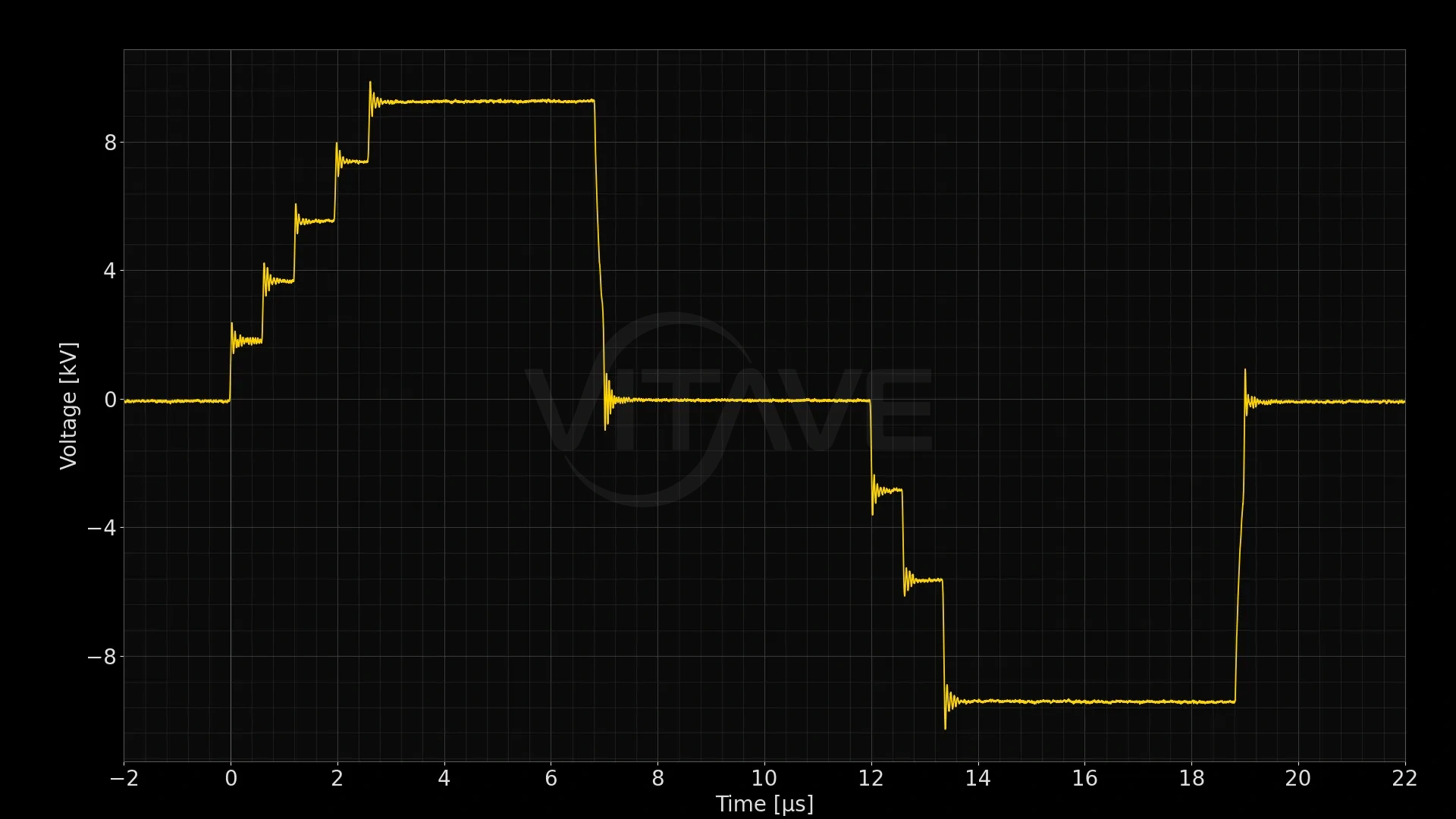
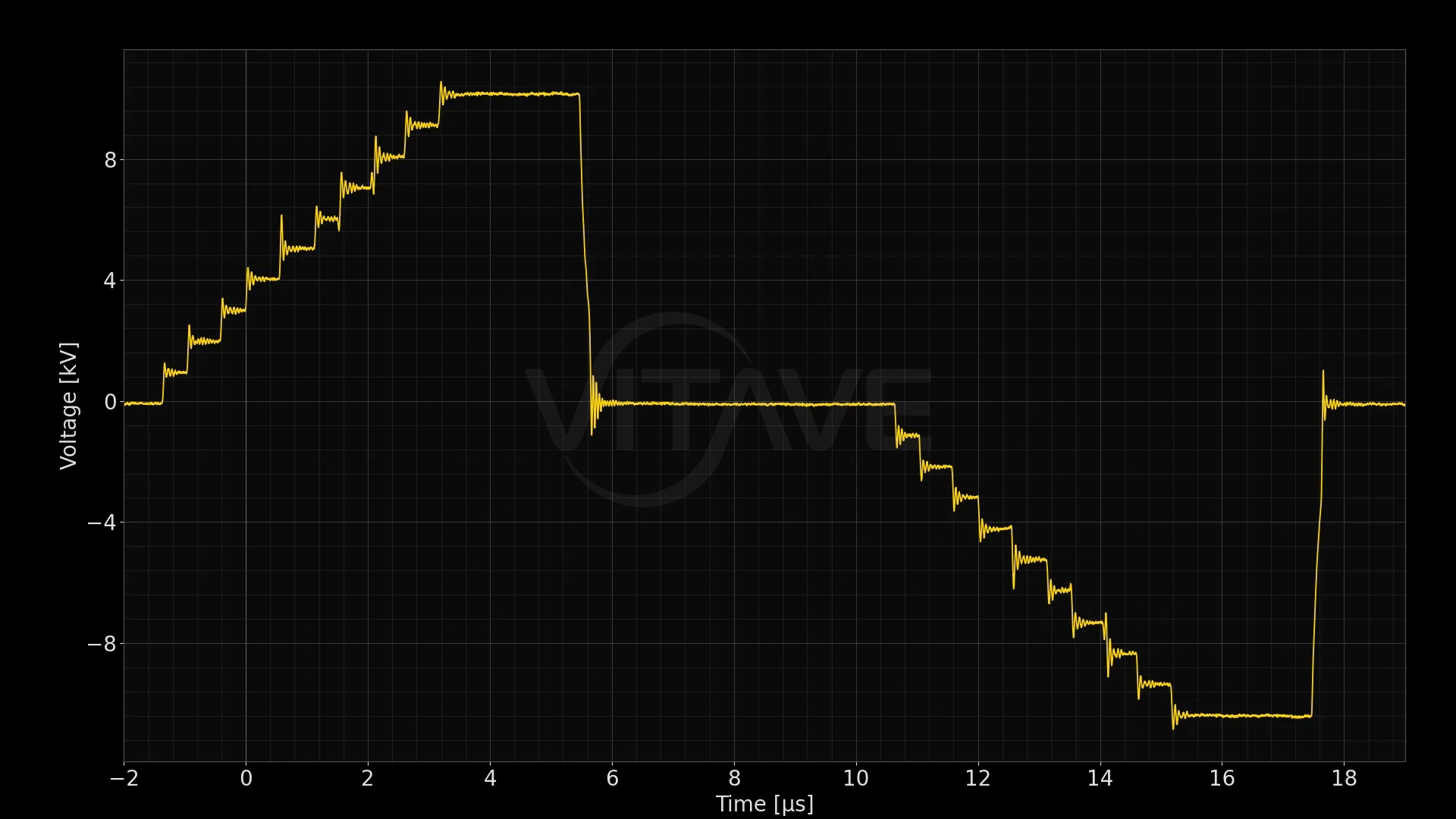
A standard pulse generator produces a single voltage level per event: the output rises to a set amplitude, holds it for the pulse duration, and returns to zero. Steps Function produces a staircase instead — multiple discrete voltage levels within a single continuous event, each held for a defined duration before the output transitions to the next level. The transitions between steps are fast, not ramped. The output does not return to zero between levels.
Each step in the waveform has its own amplitude and hold duration, delivered as one continuous pulse rather than several separate ones.
Why it matters
If your application needs the voltage to change in stages during a single pulse — not just rise, hold, and return to zero — a standard flat-top output can't do it. The alternative is firing several separate pulses to approximate the shape, which isn't the same as one controlled, continuous event.
Steps Function solves that directly: you can increase the voltage in discrete steps within a single pulse, exactly matching the profile your application calls for, without breaking it into multiple separate events.
Technical detail
Steps Function and Arbitrary Sequencing solve different problems. Arbitrary Sequencing controls a series of separate pulse events, each one starting and ending at zero. Steps Function shapes the profile within a single event, moving between levels without returning to zero in between. The two can be combined — a sequence where one or more of the events is itself a stepped waveform.
How many steps are available, how finely each level can be set, and the shortest duration a step can be held are specification-dependent — they vary by system configuration rather than being fixed across the product range.
See also