

Adjustable Overcurrent Protection — User-Set Current Limit
Advanced Monitoring & Control
What it is
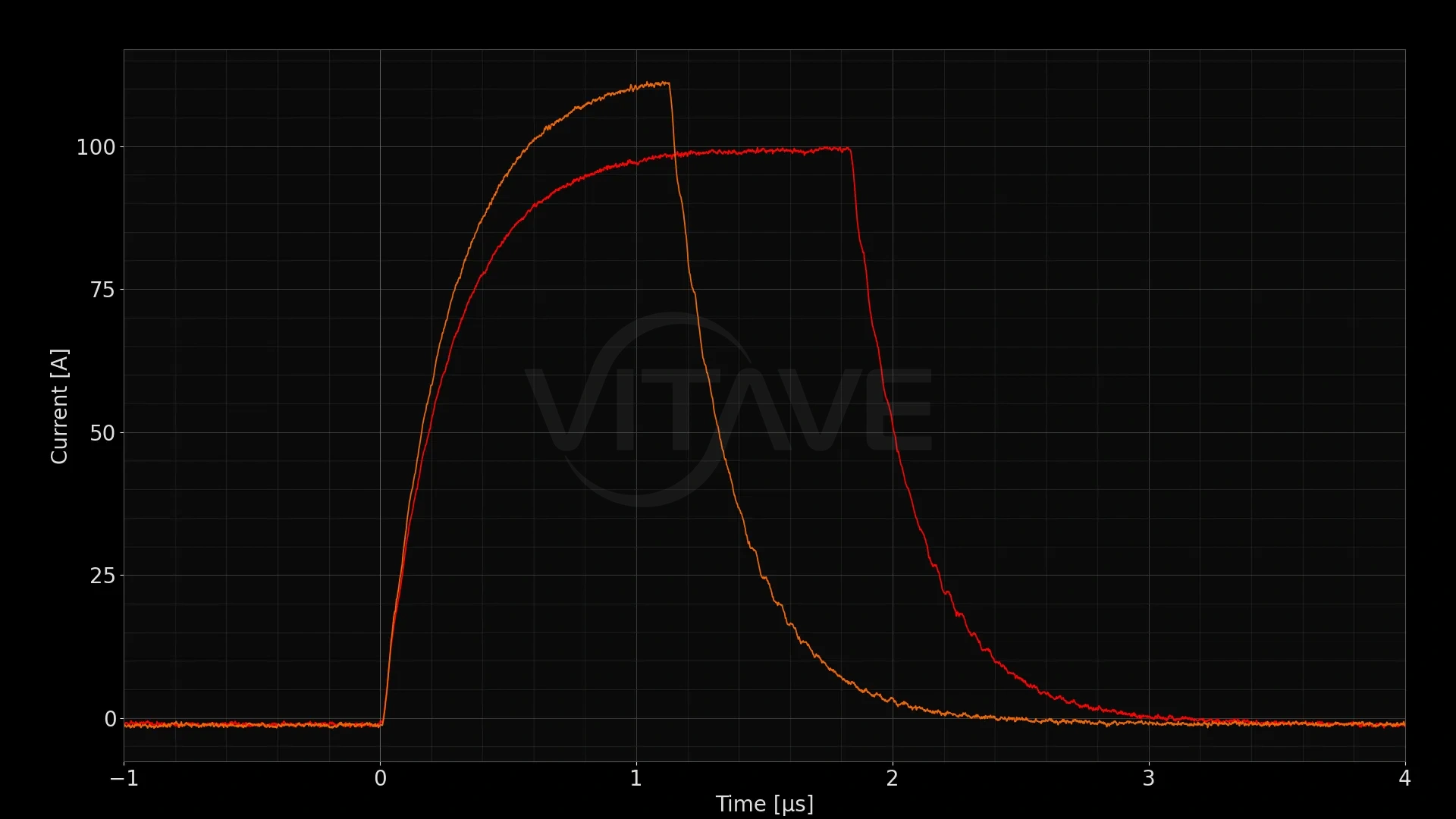
Every VITAVE system includes a fixed hardware overcurrent threshold as a baseline protection. Adjustable Overcurrent Protection adds a second, user-configurable limit below that hardware ceiling — set from the GUI, in discrete steps, to whatever level suits your setup. In effect, a single generator can be made to operate as if it had a lower current capability, without needing a different, lower-rated model to do it.
The adjustable threshold sits below the fixed hardware limit, not in place of it — and triggers at the same fast response speed as the fixed threshold, so it's just as fast and reliable. This means the operator can dial in a lower ceiling for a specific setup without ever bypassing the hardware's own protection floor.
Why it matters
If your setup includes a component, applicator, or fixture rated for less current than the generator itself can deliver, running it at the generator's full capability risks damaging that part of your setup — not the generator. Adjustable Overcurrent Protection lets you set a lower ceiling for that specific setup, so the same generator can be used safely across configurations with different current tolerances, without needing a separate, lower-rated unit. Once testing on that sensitive load is done, restoring the system's full capability is a single click on the GUI away.
Technical detail
The adjustable threshold is set from the GUI in discrete steps across the available range, rather than a continuously variable dial. It uses the same continuous current monitoring and fast-response detection circuitry as the fixed hardware threshold, so a lower, user-set limit is enforced just as quickly as the factory-set one.
When the adjustable threshold triggers, the system latches into the same fault state as a fixed-threshold event — pulsing stops and requires operator acknowledgment before resuming. The fault log records which threshold caused the shutdown, so it’s clear afterward whether the event came from the user-set limit or the hardware ceiling.
See also